Insights function & business
Cross-functional / silos / org change
42 indexed claims · 24 guests · peaked 2025-Q2
Overview
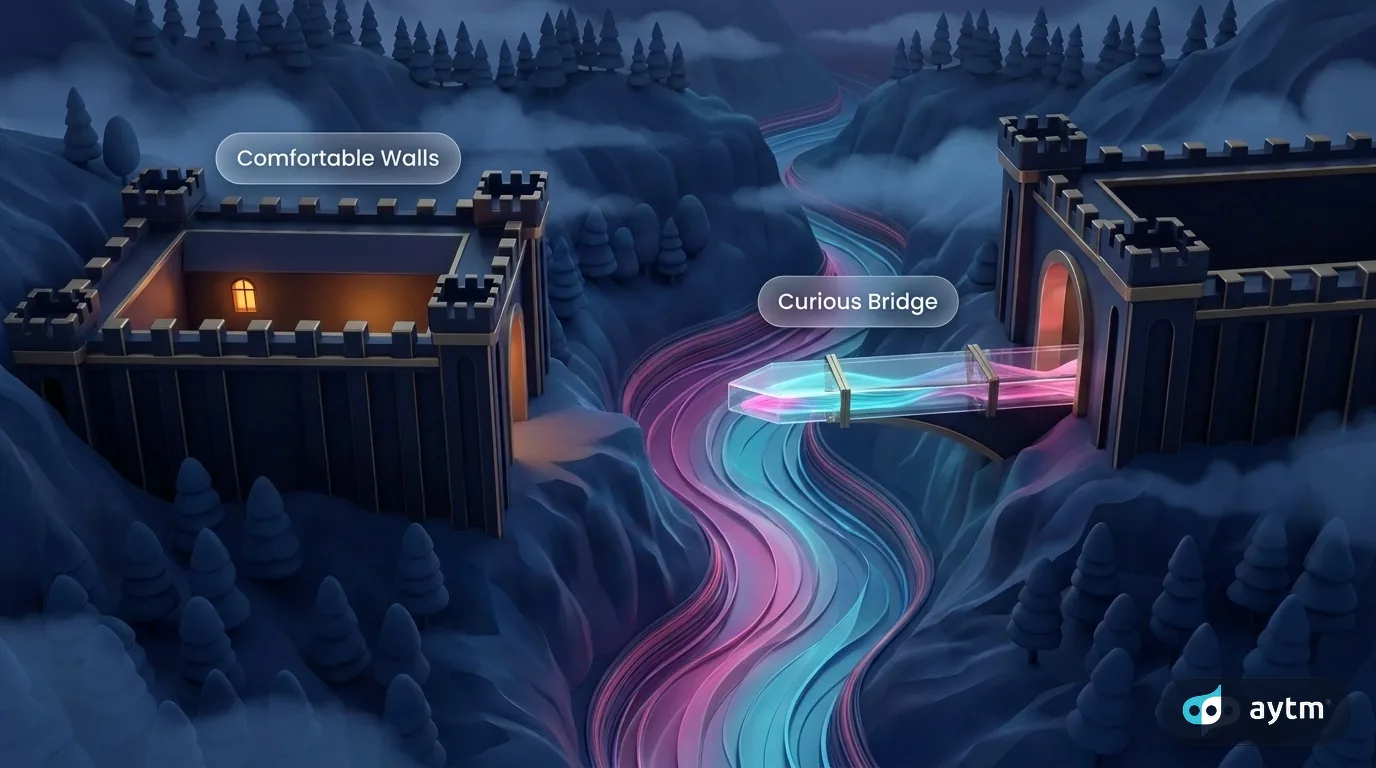
Organizational silos are the central friction in modern insights practice — not data gaps, not methodology shortfalls, but the structural and psychological barriers that prevent research from reaching the people who need it, when they need it. Across these podcast conversations, guests return again and again to two overlapping problems: the insights function's tendency to become either a bottleneck or an island, and the broader organizational immune response that walls off cross-functional collaboration. The remedies they propose span embedded research triads, shared success languages, consensus-first chartering, and purpose-built Insights Weeks, but converge on a single conviction: research value is only ever realized at the boundary between functions. What's at stake is whether insights earns its seat at the strategy table or keeps getting handed pre-formed briefs.
From the corpus
- If you understand the business you work in, you will understand business in general — your own employer is a business with finance and product functions, so learning it builds the cross-functional fluency that makes you a better partner to your customers. — Zontziry Johnson, Ep. 62 ·
cl-zontziry-johnson-026 - Putting ChatGPT on every desktop is not an AI strategy; effective adoption requires culture, runway for absorption, and patience — analytical and quantitative people often struggle with the more complex tools and need C-suite-driven cultural support. — Idil Miriam Cakim, Ep. 7 ·
cl-idil-cakim-019 - The 4D process — Define, Discover, Dream, Design — embeds empathy into innovation by uncovering insights with cross-functional stakeholders rather than presenting insights to them, producing shared ownership that converts colleagues into champions. — Lindsey Goodman, Ep. 13 ·
cl-lindsey-goodman-009 - In enterprise organizations with established ways of working, consensus building with skeptical stakeholders early in the chartering process is critical — resistance to a new centralized model dissipates when those stakeholders help define it. — Kylee Lessard, Ep. 46 ·
cl-kylee-lessard-005 - AI democratization is a net positive: it lifts the conversation on both sides, forces researchers to hone their craft and land impact precisely, and creates better cross-functional partnerships through shared tools and multiple perspectives. — Tanya Pinto, Ep. 5 ·
cl-tanya-pinto-008 - Scaling research across an enterprise is as much a mindset shift as a mechanics problem; the binding constraint is convincing teams that research is something they are allowed to do, not just something done to them by specialists. — Amberly Miller, Ep. 37 ·
cl-amberly-010 - Researchers should be embedded directly in product and design teams (the Atlassian Triad model); when product, design, and research share full context at every stage, the team is faster, less siloed, and the table is bigger. — Amberly Miller, Ep. 37 ·
cl-amberly-022 - The biggest challenge in packaging development is not research quality but internal organizational politics — cross-functional teams that lack a shared success language make misaligned decisions despite good intentions. — Matthew Salem, Ep. 32 ·
cl-matthew-salem-019
Contributing guests
Episodes in Cross-functional / silos / org change
- Your tools aren't broken, your processes are with Zontziry Johnson — Ep. 62 · Jun 9, 2026
- From scattered research to shared reality with Kylee Lessard — Ep. 46 · Feb 11, 2026
- Amberly Miller — Turning Curiosity Into Confidence: UX Research as Strategic Partnership at Prudential — Ep. 37 · Dec 2, 2025
- Behavior Over Opinion: How to Predict Packaging Success — Ep. 32 · Oct 28, 2025
- Ethnography in Action: How Lindsey Goodman Turns Observation Into Innovation — Ep. 13 · Jun 17, 2025
- The Human Side of AI: Empathy, Insights, and Innovation with Idil Miriam Cakim — Ep. 7 · May 6, 2025
- Tanya Pinto — Human at the Center: Empathy, AI, and the Researcher's Discernment — Ep. 5 · Apr 15, 2025
See Insights function & business mapped across all quarters →